A visible gap under your garage door or along its edges can let in drafts, leaves, insects, and wind-driven rain. You may notice daylight beneath the bottom seal, an opening along one side, or a space across the top when the door is closed.
The location and shape of the gap provide useful clues. Worn weatherstripping, an uneven floor, damaged sections, or a door that does not close evenly can all leave openings. The right repair starts with identifying why the gap is there.
Barber Overhead Door helps homeowners throughout Southeastern Wisconsin evaluate garage door gaps and determine the appropriate repair.
Need garage door service?
Call Barber Overhead Door today at (262) 565-7484.
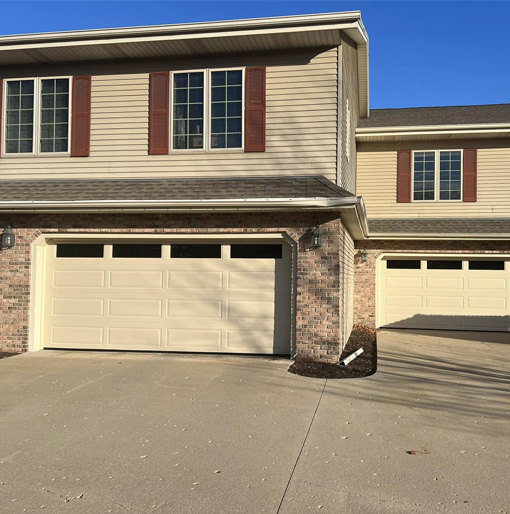
An opening beneath the door may involve a worn bottom seal, an uneven threshold, or a door that stops before reaching its proper closed position.
Look at whether the gap extends across the opening or appears only in certain spots. A consistent opening may have a different cause than a low spot in the concrete beneath an otherwise level door.
Damaged or poorly fitted perimeter weatherstripping can leave daylight along the side of a closed door. Door alignment or section damage may also contribute.
If the bottom edge is tilted or one side sits higher than the other, the lifting system and hardware need inspection. Do not assume that adding weatherstripping will correct uneven movement.
An opening above the top section may involve the perimeter seal, the position of the top section, or related hardware.
The door should be checked before adjustments are made. Changing brackets or track positions without understanding the cause can affect how the door travels.
Spaces between sections may involve damaged panels, hinges, or section joints. Some doors have section seals that can also deteriorate.
A new or widening opening deserves inspection, especially if the sections shift, bend, or make unusual noises during movement. Keep fingers away from the joints.
Bottom seals and perimeter weatherstripping can become brittle, tear, compress, or pull away from their mounting points. When they no longer contact the surrounding surfaces properly, openings can develop.
Replacement weatherstripping should fit the door and its seal-retaining system. A larger seal is not automatically the right solution.
Settled, sloped, or damaged concrete can leave a gap beneath a level door. A flexible bottom seal may accommodate some variation, but it cannot correct every floor condition.
Depending on the opening, the solution may involve an appropriate seal, a compatible threshold product, or evaluation of the concrete. Drainage should be considered before a threshold is installed.
An obstruction, mechanical resistance, or an incorrect travel setting can leave the bottom edge above the floor.
Do not increase closing force to push the door down. The cause of incomplete closure should be identified before opener settings are changed.
Bent sections, damaged hardware, or lifting-system problems can prevent the door from sitting properly in the opening.
A gap caused by a crooked door needs a mechanical repair. Weatherstripping alone will not restore proper alignment.
With the door stationary, observe the opening from a safe position:
Stop using the door if it hangs crooked, binds, or has damaged lifting components. Leave spring, cable, bottom-bracket, and track adjustments to a trained technician.
Barber Overhead Door checks the seals, door sections, alignment, hardware, closing position, and surrounding opening to identify the source of the gap.
The recommended solution may involve replacing weatherstripping, repairing damaged components, or correcting the door’s operation. If the floor or drainage contributes to the problem, those conditions need to be considered as part of the solution.
The goal is proper closure and improved sealing without placing unnecessary pressure on the door or opener.
Whether daylight shows beneath the door or a side seal has pulled away, Barber Overhead Door can evaluate the opening and explain the recommended repair.
Call (262) 565-7484 or request a garage door repair quote to get started.
Visible daylight can indicate that the seal is not making contact in that area. Worn weatherstripping, uneven concrete, or incomplete closure may be responsible.
It may help if the existing seal is worn or damaged. It will not necessarily correct a crooked door, significant floor variation, or a door that stops short of closing.
An uneven floor, damaged seal, or uneven door position may cause a corner gap. If the door itself looks tilted, have the lifting system inspected.
Only if an inspection establishes that the closing travel setting needs correction. Increasing force or travel without checking the door can create additional problems.
No. Improved seals can help reduce drafts and some weather intrusion, but garage doors are not watertight barriers. Water entry may also involve grading, drainage, or the condition of the threshold.
Not necessarily. Weatherstripping or individual components may be repairable or replaceable. Significant section damage or other structural issues may warrant discussing replacement.
Contact Information
Serving Southeastern Wisconsin
Mon-Fri: 8:00am-6:00pm
After Hours and Emergencies,
Call or Text (262) 565-7484
Service Area Map
© Barber Overhead Door. All Rights Reserved. Web Company